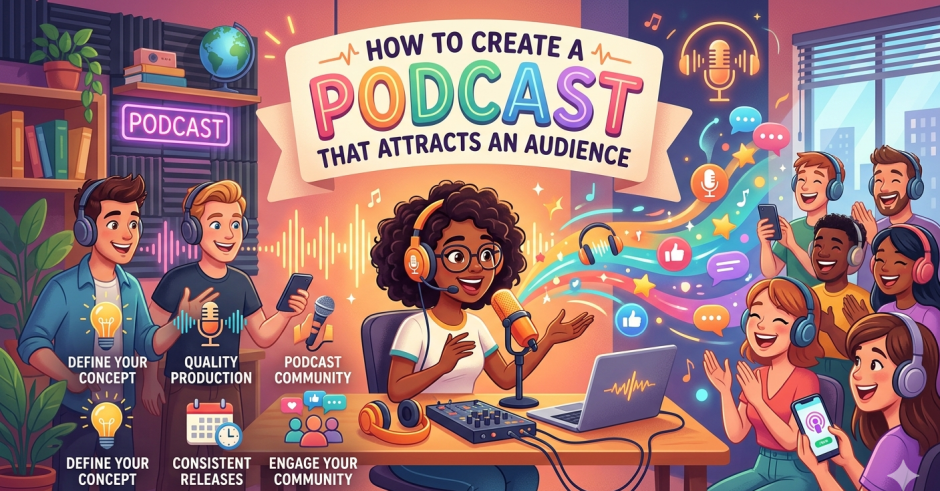
Creating an educational podcast for your community is a powerful way to share knowledge, foster engagement, and address local interests. Here’s a structured approach to help you get started:
1. Define Your Purpose and Audience
- Identify Objectives: Determine the primary goals of your podcast. Are you aiming to supplement school curricula, provide adult education, or explore local history?
- Know Your Audience: Understand the demographics and interests of your target listeners to tailor content that resonates with them.
2. Plan Your Content
- Select Relevant Topics: Choose subjects that are both educational and pertinent to your community’s needs.
- Develop a Content Calendar: Organize episode topics and release dates to maintain consistency and keep your audience engaged.
3. Assemble the Necessary Equipment
- Recording Tools: Invest in a quality microphone and headphones to ensure clear audio.
- Editing Software: Utilize user-friendly editing programs to refine your recordings.
4. Create a Conducive Recording Environment
- Quiet Space: Choose a location with minimal background noise.
- Soundproofing: Incorporate materials like curtains or carpets to reduce echo and improve sound quality.
5. Develop Engaging Content
- Script Preparation: Outline your episodes to maintain focus and ensure a smooth flow of information.
- Interactive Elements: Encourage listener participation through Q&A sessions or by addressing audience-submitted questions.
6. Record and Edit Your Podcast
- Consistent Practices: Maintain consistent microphone placement and speaking volume during recording.
- Post-Production: Edit your recordings to remove errors and enhance audio quality.
7. Publish and Distribute
- Hosting Platform: Choose a reliable podcast hosting service to upload your episodes.
- Directory Submission: Submit your podcast to platforms like Apple Podcasts, Spotify, and Google Podcasts to reach a broader audience.
8. Promote Your Podcast
- Utilize Social Media: Share episodes on platforms popular within your community.
- Collaborate Locally: Partner with local organizations or schools to expand your reach.
- Engage with Listeners: Create forums or social media groups to foster discussions and gather feedback.
9. Evaluate and Improve
- Gather Feedback: Encourage listeners to provide input on what they enjoy and areas for improvement.
- Analyze Metrics: Monitor listener statistics to understand which episodes resonate most with your audience.
10. Foster a Community
- Interactive Platforms: Establish online spaces where listeners can engage with you and each other.
- Live Events: Consider hosting live recordings or Q&A sessions to strengthen community ties.
By following these steps, you can create an educational podcast that not only informs but also unites and empowers your community.